
 Sumatra · Premium Indonesian Coffee
Indonesian Coffee Export from Sumatra
Discover the finest Indonesian coffee beans sourced directly from Sumatra, ready for global export. Offering competitive FOB terms and customizable solutions for importers.
What coffee are you sourcing?
Let us know your requirements and we’ll guide you to the best option.
For global coffee buyers seeking distinctive flavours, Indonesian coffee export offers a rich variety. From the lush regions of Sumatra, our export house connects you to the finest Arabica and Robusta beans. We navigate the complexities of Indonesian trade regulations, ensuring a smooth and compliant transaction.
Sumatra: A Key Player in Indonesian Coffee Export
Indonesia stands as one of the world’s largest coffee exporters, with Sumatra serving as a vital hub. The island’s provinces, including South Sumatra, Lampung, Aceh, and North Sumatra, contribute significantly to this status. Sumatra’s coffee export is anticipated to reach 6.5 million 60-kg bags in 2025/26, marking a 7% growth from the previous year. The favourable weather and improved agricultural inputs in southern regions, particularly for Robusta, drive this growth. Specialty Arabica profiles, such as Mandheling and Gayo, enhance Sumatra’s international reputation and appeal to premium markets.
Efficient Export Gateways from Sumatra
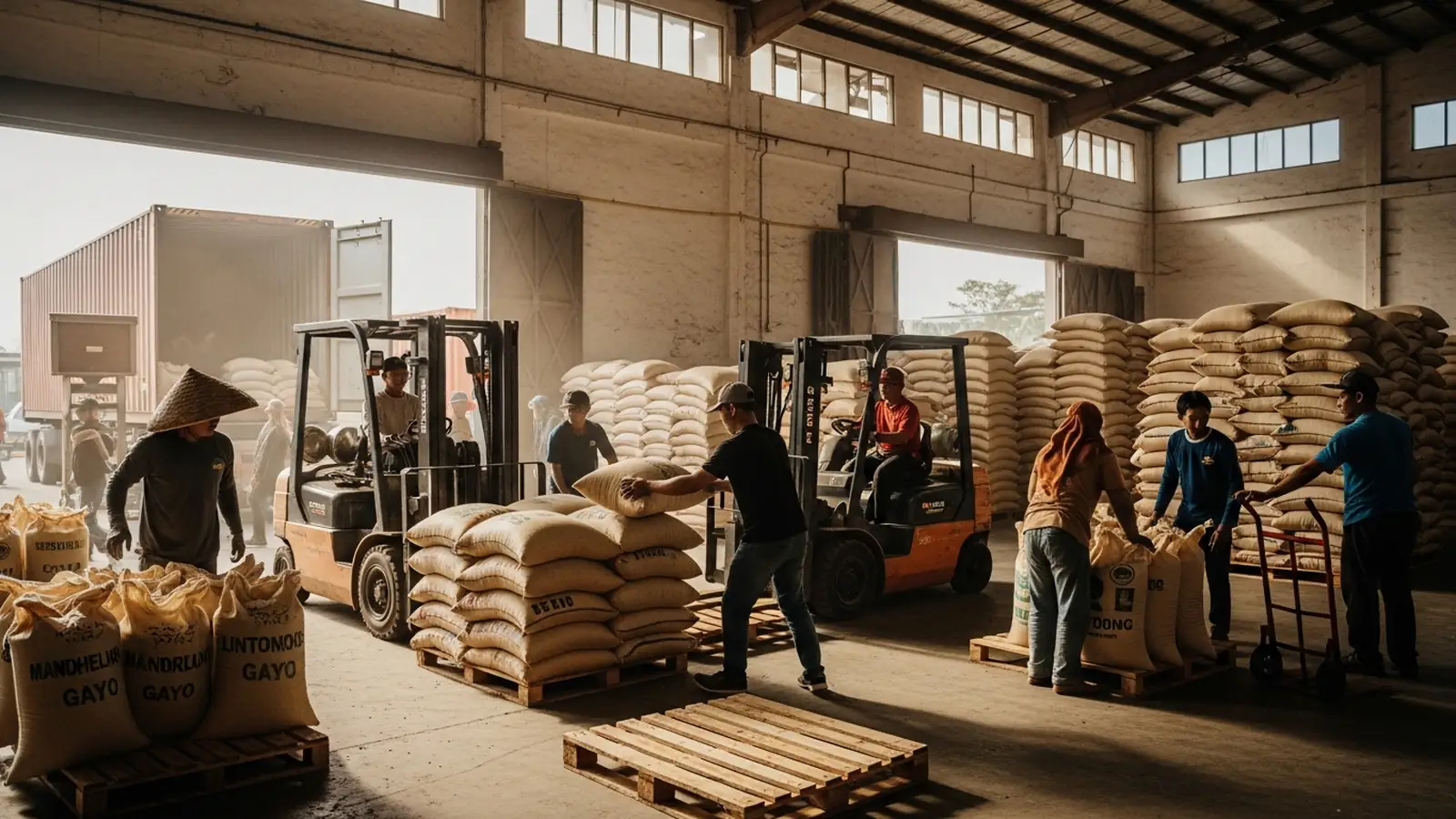
Exporting Sumatra’s coffee involves strategic logistics, with Panjang Port in Bandar Lampung and Belawan Port in Medan being the most practical gateways. Coffee milled near Lampung or South Sumatra is typically shipped via Panjang to optimise inland trucking costs. Conversely, coffee milled around Medan or Aceh is often exported through Belawan for its efficient transit times and robust feeder connections. For exporters, choosing between these ports depends on coffee origin and proximity, with Panjang preferred for locations within 250 km and Belawan for those within 300 km of Medan.
Specialty and Microlot Coffee Routing
Exporters dealing with specialty or rare microlots, such as Sumatra Super Peaberry Green Coffee Beans, sometimes opt for Tanjung Priok in Jakarta. This choice is driven by the availability of better container equipment and inspection convenience. However, it involves higher inland trucking costs, such as IDR 27–35 million from Medan to Jakarta, which can impact the overall export budget. Despite the cost, routing via Priok can save 3–5 days in transit time to North Europe, making it a viable option for buyers with tight timelines.
Legal and Compliance Framework for Exporters
Indonesian coffee exporters must operate through a registered business entity, such as a CV or PT, to legally export coffee. New exporters are initially registered as Temporary Coffee Exporters by the Director General of Foreign Trade. Once a business exports 200 tons or more annually, it can be upgraded to a Coffee Registered Exporter with a five-year permit. Compliance with quality standards set by the Ministry of Trade is crucial, and exporters must ensure their beans meet these standards.
Documentation and Quality Assurance
Exporting coffee from Indonesia involves meticulous documentation. Essential documents include a trading business license (SIUP), a business entity registration, an export permit, and a Certificate of Origin. Key documents like SPEK (Surat Persetujuan Ekspor Kopi) and a Phytosanitary Certificate ensure quality and compliance. Exporters must also lodge a Goods Export Notification (PEB) to Customs, receiving an Export Service Note (NPE) that secures the shipment. Each destination country may have specific documentation requirements, necessitating verification to ensure compliance.
Key Export Destinations and Market Reach
Indonesian coffee reaches diverse international markets, with major destinations including the United States, Egypt, Japan, Spain, and Malaysia. South Sumatra has actively expanded its export presence, with initial commercial exports to Malaysia and Australia valued at IDR 33.6 billion. The established trade routes and growing demand in these regions present lucrative opportunities for exporters. Understanding each market’s unique requirements and preferences is crucial for success in these competitive landscapes.
Choosing the Right Export Strategy
Exporters must carefully choose their shipping strategy based on budget, timeline, and destination. For North Europe, routing via Jakarta can offer faster delivery, while Belawan serves price-sensitive buyers with flexible timelines. For US West Coast importers, Priok’s predictable sailings are attractive for tight schedules, whereas Belawan is suitable for flexible arrivals. Each choice involves balancing cost, convenience, and delivery speed, requiring a strategic approach to maximise profitability and customer satisfaction.
Innovations in Indonesian Coffee Farming
Technological advancements have begun to reshape coffee farming in Indonesia. The adoption of precision agriculture tools and mobile technology has enabled farmers to optimize their yield and quality. Mobile apps provide critical information on weather patterns, pest control, and best farming practices, allowing farmers to make informed decisions. Additionally, the introduction of sustainable farming techniques, such as intercropping and organic fertilizers, is helping to enhance both productivity and environmental stewardship. These innovations not only improve the quality of the beans but also strengthen the economic resilience of farming communities.
Impact of Climate Change on Coffee Production
Climate change poses significant challenges for Indonesian coffee production. Alterations in rainfall patterns and rising temperatures can affect bean quality and yield. Coffee plants are particularly sensitive to climate variations, which can lead to increased pest infestations and diseases. To combat these challenges, farmers are adopting climate-smart agricultural practices. These include shade-grown coffee techniques, which help maintain temperature stability and reduce water stress. Implementing agroforestry systems also contributes to biodiversity conservation and improves soil health, ensuring sustainable coffee production amidst changing climate conditions.
Role of Cooperatives in the Coffee Supply Chain
Cooperatives play a crucial role in the Indonesian coffee supply chain. By organizing farmers into collective groups, cooperatives facilitate access to resources, training, and market opportunities. They help smallholder farmers negotiate better prices and terms with buyers, ensuring fair compensation for their produce. Cooperatives also provide essential services such as quality control, certification assistance, and financial support. By promoting shared knowledge and community-driven initiatives, cooperatives not only enhance the quality of the coffee but also empower local communities, contributing to the overall sustainability of the industry.
Enhancing Quality Through Post-Harvest Processing
Post-harvest processing is a critical stage in determining the quality of Indonesian coffee beans. The methods employed can significantly affect the flavor profile and market value of the coffee. Wet processing, commonly used for Arabica beans, involves fermenting the beans to remove mucilage, enhancing their acidity and brightness. Dry processing, often applied to Robusta beans, involves sun-drying the beans with their pulp intact, resulting in a heavier body and deeper flavor. Innovations in post-harvest techniques, such as controlled fermentation and mechanical drying, are being adopted to maintain consistency and quality. These practices not only improve the sensory attributes of the coffee but also increase the competitiveness of Indonesian beans in the global market.
Government Initiatives to Support Coffee Export
The Indonesian government plays an active role in supporting the coffee export industry through various initiatives. Programs aimed at improving infrastructure, such as better roads and port facilities, are crucial for efficient logistics and export processes. The government also provides financial incentives and subsidies to encourage smallholder farmers to adopt sustainable practices and improve productivity. Training programs and workshops are regularly conducted to enhance farmers’ knowledge of global quality standards and market trends. By fostering a supportive environment, the government helps strengthen Indonesia’s position as a leading coffee exporter and ensures the industry’s long-term growth and sustainability.
Ready to explore the rich offerings of Indonesian coffee export? Our team at Indonesian Coffee Export is here to guide you through the process. Visit our contact page to start your journey with us. For more insights, check our guides and Sumatra coffee export details.